What Is Clean Energy Technology for Global Buyers?

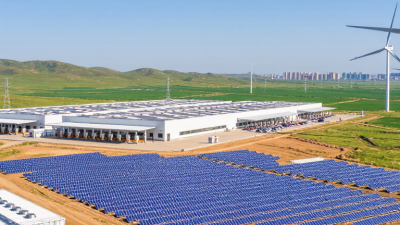
For global buyers, clean energy technology means more than solar panels or wind turbines. It includes batteries, smart grids, heat pumps, green hydrogen, energy software, and efficient industrial systems. These technologies convert investment into measurable outcomes: lower emissions, stronger energy security, and more predictable operating costs.

The market is expanding quickly. IRENA’s Renewable Capacity Statistics 2025 reports that renewable power capacity grew by about 585 gigawatts in 2024. Renewables represented 92.5% of total global power-capacity expansion. The IEA’s World Energy Investment 2024 also estimated that global clean-energy investment would exceed 2 trillion dollars. That figure was roughly twice the investment directed toward fossil fuels.

Fatih Birol, Executive Director of the International Energy Agency, said, “The clean energy economy is emerging faster than many people realise.” His observation matters to procurement teams comparing suppliers, technologies, and project risks. A factory manager may see battery containers beside a substation, not an abstract transition. A city buyer may examine heat-pump performance during a cold morning, when efficiency becomes a practical test.

Yet the numbers need careful interpretation. Definitions vary across reports, and project quality can differ sharply. A low-cost system may still face grid delays, scarce minerals, weak maintenance support, or limited recycling options. Buyers therefore need more than impressive forecasts. They need verified lifecycle data, credible warranties, local service capacity, and transparent carbon accounting.

The opportunity is substantial. The evidence is promising. But technology selection still requires disciplined questions, independent verification, and a willingness to challenge optimistic assumptions.

What Is Clean Energy Technology for Global Buyers?

Definition and Scope of Clean Energy Technology

What Is Clean Energy Technology for Global Buyers?

Definition and Scope of Clean Energy Technology

Clean energy technology includes tools that produce, store, distribute, or reduce energy with lower environmental impact. Its scope reaches beyond solar panels and wind turbines. It also includes geothermal systems, battery storage, smart grids, heat pumps, energy-efficient buildings, and low-carbon hydrogen. For global buyers, the definition depends on measurable performance, not attractive marketing language. A credible assessment examines lifecycle emissions, resource use, operating safety, and expected service life.

In practice, buyers should study how equipment performs in its real location. A storage system for a humid coastal grid faces different risks than one in a dry inland region. Review temperature limits, maintenance access, local grid rules, recycling options, and supply-chain records. Independent testing and transparent technical documents improve reliability. However, no solution is completely clean. Manufacturing may require mining, shipping, water, and significant energy. This point is often overlooked. It deserves honest attention.

Tips: Compare lifetime performance instead of purchase price alone. Request verified efficiency data and clear warranty terms. Check whether local technicians can maintain the system. Ask how components will be repaired, reused, or recycled. Small details matter. A technically advanced product may still fail commercially if local infrastructure cannot support it. Buyers should also revisit their assumptions, because energy conditions and regulations can change faster than expected.

Key Types of Clean Energy Technologies

Clean energy technology includes systems that produce power with lower greenhouse gas emissions than coal or oil. Global buyers often compare solar photovoltaic, wind, hydropower, geothermal, and sustainable bioenergy. Each type fits different conditions. Solar panels work well on sunny rooftops and unused land. Wind turbines need steady wind, suitable terrain, and careful community planning. Hydropower can provide stable electricity, but new projects may affect rivers and local ecosystems.

Energy storage is another key technology. Lithium-based batteries can balance solar and wind output during cloudy or calm periods. Pumped-storage hydropower offers longer-duration capacity where geography allows it. Thermal storage can support industrial heat applications. These systems are useful, but battery costs, mineral sourcing, fire protection, and recycling require serious assessment. The cheapest purchase price may not represent the lowest lifetime cost.

Clean electricity also needs stronger transmission networks, smart controls, and reliable forecasting. Green hydrogen may help reduce emissions in shipping, steel, and chemical production, although its conversion losses remain significant. Buyers should review certified performance data, maintenance records, grid conditions, and end-of-life plans. A site visit can reveal practical issues, such as dust on panels, difficult access roads, or noise near homes. Standards help.

No technology is perfect. A responsible procurement decision weighs emissions, resilience, land use, worker safety, local acceptance, and long-term service capacity. Some projects look impressive on paper but underperform in changing weather. That gap deserves attention.

What Is Clean Energy Technology for Global Buyers? - Key Types of Clean Energy Technologies

A practical comparison of major clean energy technologies, typical performance ranges, applications, and procurement considerations.

Technology Primary Energy Source Typical Capacity Factor or Efficiency Typical Project Life Common Global Applications Main Advantages Key Limitations Important Buyer Considerations
Solar Photovoltaic (PV) Sunlight converted directly into electricity Typical capacity factor: 10%–25%; commercial module efficiency commonly about 18%–24% Modules commonly designed for 25–35 years Rooftops, utility-scale solar farms, remote power systems, commercial facilities Modular, scalable, low operating costs, suitable for distributed generation Output varies with daylight, weather, season, and geographic location Solar resource, land or roof condition, degradation rate, recycling plan, grid connection, storage needs
Onshore Wind Kinetic energy of land-based wind Typical capacity factor: 30%–50% Approximately 20–30 years Utility-scale generation, regional power systems, industrial electricity supply High energy yield in suitable wind corridors and relatively low operational emissions Variable output, permitting requirements, visual and ecological impacts, transmission needs Wind assessment, turbine availability, transport access, grid capacity, environmental permits
Offshore Wind Kinetic energy of offshore wind Typical capacity factor: 35%–55% Approximately 25–30 years Large-scale coastal electricity supply and national grid decarbonization Strong and more consistent wind resources; large project potential near coastal demand centers High capital costs, marine construction complexity, corrosion, port and transmission requirements Seabed conditions, vessel and port availability, cable route, marine permits, long-term service capability
Hydropower Potential and kinetic energy of moving or stored water Typical capacity factor: 30%–60%; turbine-generator efficiency can exceed 80% Often 50–100 years or more with refurbishment Baseload generation, flexible generation, pumped-storage balancing Dispatchability, long asset life, grid stability, and potential energy storage Large civil works, ecological and social impacts, drought exposure, lengthy permitting Water availability, hydrology, sedimentation, community impact, dam safety, climate resilience
Geothermal Energy Heat from the Earth’s interior Typical capacity factor: 70%–95% Approximately 25–50 years, subject to reservoir management Firm electricity, district heating, industrial process heat, ground-source heat pumps Reliable output with limited weather dependence and a small land footprint Resource-specific, exploration risk, drilling costs, and possible induced seismicity Reservoir temperature, permeability, drilling risk, water chemistry, reinjection strategy
Sustainable Bioenergy Organic materials such as residues, wastes, and sustainably managed biomass Electricity capacity factor commonly about 50%–85%, depending on fuel supply and plant design Approximately 20–30 years for many power facilities Dispatchable electricity, renewable heat, biogas, biomethane, sustainable fuels Can use waste streams and provide dispatchable energy or fuel Feedstock availability, land-use concerns, air emissions, logistics, and sustainability risks Feedstock traceability, lifecycle emissions, certification, transport distance, local air-quality rules
Battery Energy Storage Electricity stored electrochemically and released when needed Round-trip efficiency commonly about 80%–95%; typical systems provide 1–8 hours of storage Often 10–20 years, depending on chemistry, cycling, and operating conditions Renewable integration, peak shaving, backup power, frequency regulation, microgrids Fast response, modular deployment, improved renewable flexibility and grid reliability Degradation, thermal safety requirements, material supply risks, and limited long-duration capability Usable energy, power rating, degradation warranty, safety certification, fire protection, recycling
Green Hydrogen Water separated into hydrogen and oxygen using renewable electricity Electrolyzer electricity-to-hydrogen efficiency commonly about 50%–80% on a lower-heating-value basis Electrolyzer systems commonly designed for approximately 15–25 years Steelmaking, chemicals, refining alternatives, shipping fuels, seasonal energy storage Useful for industrial sectors that are difficult to electrify directly High electricity demand, storage and transport complexity, infrastructure gaps, higher current costs Renewable electricity sourcing, water availability, hydrogen purity, compression, safety, certification
Heat Pumps Ambient air, ground, or water heat transferred using electricity Seasonal coefficient of performance commonly about 2.5–5.0, depending on climate and system design Approximately 15–25 years for many systems Residential heating, commercial buildings, district heating, water heating, industrial low-temperature heat High energy efficiency, reduced direct fossil-fuel use, heating and cooling from one system Performance declines in extreme conditions; requires suitable building systems and electricity supply Climate zone, refrigerant choice, installation quality, noise, maintenance, building insulation
Smart Grids and Demand Response Digital monitoring, automated controls, flexible loads, and distributed energy resources Performance measured through peak-load reduction, response time, and avoided energy use rather than capacity factor Digital equipment commonly 5–15 years; infrastructure life varies by asset Grid balancing, electric-vehicle charging, commercial buildings, microgrids, renewable integration Improves visibility, flexibility, resilience, and utilization of existing grid assets Cybersecurity, interoperability, data privacy, regulatory complexity, and integration costs Open standards, cybersecurity controls, data ownership, communication reliability, measurable flexibility

Note: Performance figures are indicative global ranges. Actual results depend on site conditions, climate, system design, operating practices, grid conditions, regulations, and project scale. Capacity factor refers to actual annual energy production divided by the maximum possible production over the same period.

How Clean Energy Technologies Work

Clean energy technology converts natural flows into useful power with fewer operational emissions. Solar panels use semiconductor cells to turn sunlight into direct current. An inverter changes that current into alternating current for buildings and local grids. Output rises on bright, cool days and falls under cloud cover.

Wind turbines work differently. Moving air turns blades around a rotor, driving a generator inside the nacelle. Sensors adjust blade angles as wind speed changes. This protects equipment and improves production. Batteries store electricity during surplus periods, then release it when demand increases. A battery system is not an energy source. It is a timing tool.

Heat pumps move heat rather than create it through combustion. In heating mode, refrigerant absorbs outdoor heat and releases it indoors. The process can still work in cold weather, although efficiency may decline. Smart controls balance equipment output with prices, weather, and household demand. Buyers should examine measured performance, maintenance records, grid compatibility, and local installation skills. A technically impressive system can disappoint when spare parts arrive slowly or wiring is poorly planned. No design is perfect. Real projects need monitoring, honest testing, and room for correction.

Benefits and Challenges for Global Buyers

What Is Clean Energy Technology for Global Buyers?

Benefits and Challenges for Global Buyers

Clean energy technology includes solar photovoltaic systems, wind turbines, battery storage, heat pumps, and renewable-powered industrial equipment. For global buyers, these solutions can reduce operational emissions and exposure to volatile fuel prices. The International Energy Agency reported that global clean-energy investment was expected to reach about $2 trillion in 2024, twice fossil-fuel investment. That shift shows growing market confidence, but not guaranteed project success.

The benefits are measurable. Renewable electricity can support long-term power contracts and improve energy-cost planning. The International Renewable Energy Agency reported 585 gigawatts of renewable capacity additions in 2024. Buyers may also gain stronger supply-chain resilience by combining local generation with storage. However, performance depends on location. A solar system in a dusty region needs frequent cleaning. A wind project may face seasonal output changes. Small details matter.

Challenges remain difficult for international procurement teams. Grid connection delays, uneven permitting rules, currency risk, and limited financing can extend delivery schedules. The IEA has warned that grids and storage must expand rapidly to support clean-energy growth. Buyers should examine equipment warranties, degradation rates, recycling plans, cybersecurity controls, and verified emissions data. Supplier claims are not enough. Independent testing is better. Yet even careful due diligence has limits, especially when mineral sourcing and transport emissions remain unclear. Reliability improves through transparent contracts, but perfection is unrealistic.

How to Evaluate and Purchase Clean Energy Solutions

What Is Clean Energy Technology for Global Buyers?

How to Evaluate and Purchase Clean Energy Solutions

Clean energy purchasing starts with the site, not the sales brochure. Measure hourly demand, peak loads, grid reliability, and available installation space. According to the International Energy Agency’s Renewables 2024 report, global renewable capacity additions reached almost 510 gigawatts in 2023. This growth creates more choices, but also more comparison risks. Buyers should assess energy yield, system efficiency, degradation rates, safety controls, and expected operating life. Ask for third-party test results and transparent carbon-accounting methods.

Price is only one part of the decision. The International Renewable Energy Agency reported that 81% of newly commissioned utility-scale renewable projects in 2023 produced electricity below the cost of new fossil-fuel alternatives. Still, a lower quoted price may exclude grid upgrades, maintenance, replacement parts, insurance, or recycling. Build a total-cost model across the full project life. Check warranty terms carefully. Confirm who handles remote monitoring and emergency repairs. Require evidence of installation experience in similar climates.

Numbers can mislead. A high-efficiency system may perform poorly under dust, heat, weak grids, or limited technical support. Buyers should request site-specific simulations, realistic performance guarantees, and references from comparable projects. BloombergNEF recorded global energy-transition investment of 1.77 trillion dollars in 2023, showing strong market momentum. Yet rapid expansion can encourage rushed procurement. A practical review should include supplier financial health, workforce training, data security, permitting responsibilities, and end-of-life planning. Leave room for uncertainty. Forecasts are never perfect.

What Is Clean Energy Technology for Global Buyers?

Indicative global weighted-average levelized cost of electricity (LCOE) by renewable technology, 2023

For global buyers, LCOE is a useful first screening metric when comparing clean energy options. Lower values can indicate stronger cost competitiveness, but final purchasing decisions should also consider resource quality, project scale, grid access, storage needs, permitting, financing, equipment lifetime, and local operating conditions. Values are global weighted averages in 2023 and exclude company-specific pricing.

Source: International Renewable Energy Agency (IRENA), Renewable Power Generation Costs in 2023. Units: USD/MWh.