China Top 10 Home Energy Systems Manufacturers
China’s home energy systems sector serves households seeking steadier power, lower grid dependence, and better use of rooftop solar. Products commonly combine solar panels, batteries, inverters, and monitoring software. The details matter. Battery capacity, inverter compatibility, safety testing, warranty terms, and service support can differ widely between manufacturers. Amory Lovins, an energy-efficiency expert and Rocky Mountain Institute co-founder, put it simply: “The cheapest energy is the energy you don’t use.” That principle is relevant here. A well-sized system can be more useful than a larger one that rarely matches a household’s needs. Still, storage cannot solve every problem.
This guide examines ten Chinese manufacturers of home energy systems, focusing on product range, technical capability, manufacturing experience, and overseas support. It is a comparison, not a guarantee of performance. Readers should check current specifications and warranty conditions directly with each supplier. Certifications and grid requirements also vary by market, so a product suitable in one country may need different approvals elsewhere. Product claims deserve scrutiny. Where public information is limited, that uncertainty should remain visible rather than being filled with assumptions. The shortlist aims to help buyers ask sharper questions about battery chemistry, system integration, software updates, and after-sales service. A strong manufacturer offers more than impressive capacity figures; it provides clear documentation and practical support. Not every household needs backup power. That caveat matters when comparing brands.
Home Energy Systems: Core Components and Household Applications
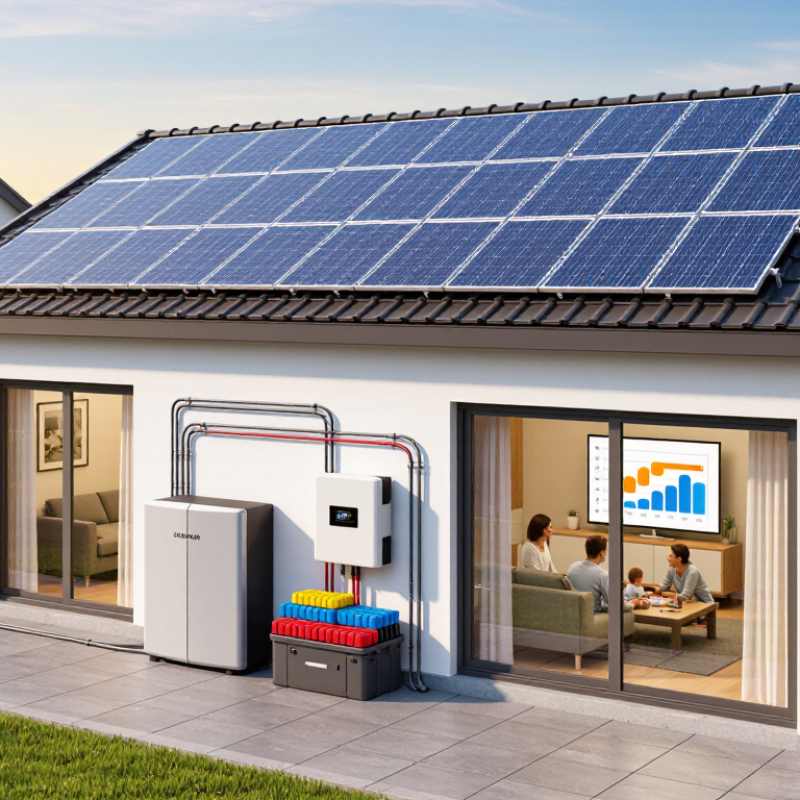
A home energy system links electricity generation, storage, conversion, and household loads. Rooftop solar panels produce direct-current electricity, which an inverter converts into the alternating current used by most appliances. A battery stores surplus power for later, such as after sunset or during a short grid outage. A home energy management system tracks production and consumption, helping residents schedule flexible loads like water heating or electric-vehicle charging.
The parts must work as a coordinated system. Battery capacity affects how long essential circuits can run, while inverter output limits how many devices can operate at once. A refrigerator, router, and a few lights may be practical backup loads; an oven or central air conditioner can demand far more power. That distinction matters. Real homes are messier than a wiring diagram, and cloudy weather or seasonal usage can change expected performance. Reviewing electricity bills and identifying priority circuits gives installers useful sizing information. Household applications also depend on safe equipment placement, ventilation requirements, and qualified installation. Even with careful planning, estimates are not guarantees; monitoring actual use after installation can reveal where the system needs adjustment.
China Top 10 Home Energy Systems Manufacturers — Core Components and Household Applications
Typical rated power ranges for selected residential energy system components and applications (kW).
Ranges are representative residential examples, not specifications for any particular manufacturer. Actual system sizing depends on household demand, climate, equipment efficiency, and local electrical standards. Battery capacity is measured in kWh; this chart shows inverter power in kW.
China’s Residential Energy Storage Manufacturing Landscape
China’s residential energy storage manufacturing landscape spans battery production, power conversion, system integration, and monitoring software. Many manufacturers serve homeowners seeking backup power or greater use of rooftop solar. Their offerings differ in battery chemistry, usable capacity, inverter compatibility, and installation support. Those details matter more than a headline capacity figure.
Tips: Compare usable energy, continuous power, warranty terms, and compatibility with your existing equipment. Ask how the system performs during a power outage. Check whether monitoring shows clear data, such as daily charging and household consumption. Small details count.
Manufacturing scale can support competitive pricing and a broad range of system designs, but quality and service are not identical across suppliers. A residential system also depends on installation, ventilation, electrical conditions, and local climate. Request test documentation and clear after-sales arrangements before making a decision. Be cautious of promises that sound universal; actual performance depends on the home, usage, and setup. The landscape is still changing, and product specifications alone do not tell the whole story.
Criteria for Evaluating Home Energy System Manufacturers
When evaluating home energy system manufacturers, examine the complete system, not just battery capacity or advertised efficiency. Ask how the battery, inverter, solar panels, and backup circuits work together during an outage. Request clear specifications for usable capacity, power output, operating temperature, and expected performance. These details help reveal whether the system suits a real household’s loads, from a refrigerator to a heat pump.
Details matter.
Safety and reliability need evidence. Review test reports and certifications relevant to the intended market, and check whether installation guidance is clear. A polished monitoring app is useful, but it cannot replace dependable hardware or responsive technical support. Ask who handles troubleshooting and how quickly replacement parts are typically available.
No checklist catches every awkward installation.
Compare warranty terms carefully, including coverage limits, service conditions, and what happens if a component fails. Ask for examples of completed residential projects with similar system sizes and usage patterns. Independent reviews can add context, though one customer’s experience may not predict yours. A neat specification sheet can still leave practical questions unanswered. I would want those answered before comparing prices. Also consider whether the manufacturer provides ongoing software updates and publishes maintenance requirements in plain language.
Profiles of 10 Leading Home Energy System Manufacturers in China
This profile examines ten leading Chinese home energy system manufacturers through practical differences, not brand claims. One specializes in compact hybrid inverters for narrow utility rooms. Another focuses on modular battery cabinets, where installers can add capacity without replacing the whole unit. The remaining profiles cover integrated solar-and-storage packages, backup power, battery management, and export-oriented system design. These distinctions matter: a quiet, wall-mounted unit may suit an apartment, while a larger home may need expandable storage and multiple inverter inputs.
The IEA’s Batteries and Secure Energy Transitions report (2024) says global battery storage additions reached about 42 GW in 2023, more than 130% above 2022. That figure includes more than residential systems, so it should not be read as a measure of home demand alone. The report also notes that lithium-ion battery prices have fallen sharply since 2010. Lower costs help, but they do not guarantee a dependable installation.
Across the ten profiles, useful comparison points include usable capacity, continuous output, backup switching time, warranty terms, and compatibility with rooftop solar. Look closely at thermal management, too. A datasheet rarely shows how a system behaves in a hot garage or during repeated cloudy days. One weakness in many manufacturer comparisons is limited, independently verified field data. That deserves more attention.
China Top 10 Home Energy Systems Manufacturers - Profiles of 10 Leading Home Energy System Manufacturers in China
Anonymized residential energy-storage product profiles — illustrative market comparison, not a ranked list of named companies
| Profile |
Typical system format |
Common battery chemistry |
Indicative residential battery range |
Indicative inverter range |
Typical application |
Key points to verify |
| Profile 01 |
Hybrid inverter paired with a modular battery bank |
Lithium iron phosphate (LFP) |
About 5–30 kWh |
About 3–12 kW |
New solar-plus-storage installations for homes |
Battery and inverter compatibility; backup output; local grid-code approval |
| Profile 02 |
Stackable battery modules with a separate control unit |
LFP |
About 5–40 kWh |
About 5–15 kW |
Homes seeking expandable storage capacity |
Maximum supported modules; usable capacity; warranty conditions at the selected configuration |
| Profile 03 |
AC-coupled battery system designed to add storage to an existing solar installation |
LFP |
About 5–20 kWh |
About 3–10 kW |
Solar system retrofits |
Compatibility with the existing inverter; round-trip efficiency; backup-load limits |
| Profile 04 |
Integrated all-in-one unit combining inverter and battery components |
LFP |
About 5–20 kWh |
About 3–10 kW |
Space-conscious residential installations |
Indoor or outdoor installation rating; cooling approach; service access and replacement process |
| Profile 05 |
Hybrid or off-grid system with battery storage and solar input |
LFP; some product lines may offer other lithium-ion chemistries |
About 5–30 kWh |
About 3–12 kW |
Homes with weak-grid conditions or a need for backup operation |
Off-grid operating limits; generator input support; surge capacity and transfer time |
| Profile 06 |
High-voltage modular battery system paired with a compatible hybrid inverter |
LFP |
About 10–40 kWh |
About 5–15 kW |
Larger homes with higher daily energy use |
Battery voltage range; approved inverter combinations; commissioning requirements |
| Profile 07 |
Low-voltage battery modules with a residential inverter |
LFP |
About 5–20 kWh |
About 3–8 kW |
Small homes and systems prioritizing modular replacement |
Continuous discharge rating; parallel-connection limits; cable and protection requirements |
| Profile 08 |
Three-phase hybrid inverter system with expandable storage |
LFP |
About 10–40 kWh |
About 8–20 kW |
Three-phase homes and larger residential loads |
Phase balancing; three-phase backup capability; local interconnection rules |
| Profile 09 |
Backup-oriented system with dedicated essential-load output |
LFP |
About 5–30 kWh |
About 3–15 kW |
Homes prioritizing power continuity during grid outages |
Whole-home versus essential-load backup; motor-start capability; backup duration assumptions |
| Profile 10 |
Solar, inverter, battery and energy-management components offered as a coordinated system |
Usually LFP in residential storage configurations |
About 5–30 kWh |
About 3–15 kW |
Homeowners seeking coordinated monitoring and energy control |
Monitoring functions; software and communication compatibility; data access and after-sales support |
Data note: The profiles above describe common residential product configurations found in the market; they are not company-specific specifications, company rankings or verified offers from individual manufacturers. Capacity and power ranges are indicative and vary by model and configuration. Before purchase, request current datasheets and confirm applicable safety, transport and grid-interconnection requirements, such as IEC 62619, UN 38.3 and local grid codes where relevant.
Comparing Technologies, Product Portfolios, and Market Reach
China’s top home energy system manufacturers differ in more than battery capacity. Some focus on integrated systems that pair batteries, inverters, and monitoring software. Others offer broader product portfolios, including modular storage for homes with changing energy needs. Compare usable capacity, continuous output, backup switching time, and stated operating temperature. A system that looks strong on paper may feel different in a small utility room. Check installation requirements, warranty terms, and service access in your region. Market reach matters, but distribution alone does not guarantee responsive support. Small details matter.
Tips: Ask for a clear equipment list and a sample monitoring screen. Check whether the system can work with your existing solar setup. Request written details on battery expansion and maintenance. Compare these points consistently.
For a fair comparison, separate product capability from company scale. Export presence and manufacturing capacity can suggest experience, yet local technicians and spare-parts access affect daily ownership. Product data also changes, so verify current specifications directly before making a decision. One weakness in this comparison is that published figures may use different test conditions. Treat rankings as a starting point, not a final verdict.