
Global sourcing increasingly depends on equipment that performs reliably across changing markets and operating conditions. Advanced inverter technology offers a practical response to this challenge. It can regulate energy conversion more precisely, reduce unnecessary power loss, and support stable performance under varying loads. For procurement teams, these benefits affect more than product specifications. They influence operating costs, maintenance planning, and customer confidence.
The stakes are real. A sourcing decision may involve different grid standards, climates, installation practices, and service capabilities. Experienced buyers therefore examine efficiency curves, thermal management, protection functions, warranty terms, and supplier testing procedures. A credible manufacturer should provide traceable test data, clear technical documentation, and responsive after-sales support. Factory audits and sample evaluations can reveal details that brochures often miss, such as connector quality, cooling noise, or firmware stability.
Still, advanced inverter technology is not automatically the best choice for every project. Higher efficiency may involve greater upfront cost or more complex servicing. Specifications can look impressive while field performance remains uncertain. That is where careful comparison matters. Procurement professionals should assess total ownership cost, local support, spare-part availability, and compatibility with the intended system. Independent verification strengthens the decision, especially when suppliers make broad performance claims. Some assumptions may prove wrong after installation. That is worth acknowledging. Reliable global sourcing comes from disciplined research, transparent communication, and evidence gathered from real operating conditions. When technology, supplier capability, and project needs align, advanced inverter technology becomes a measured investment rather than a fashionable upgrade.
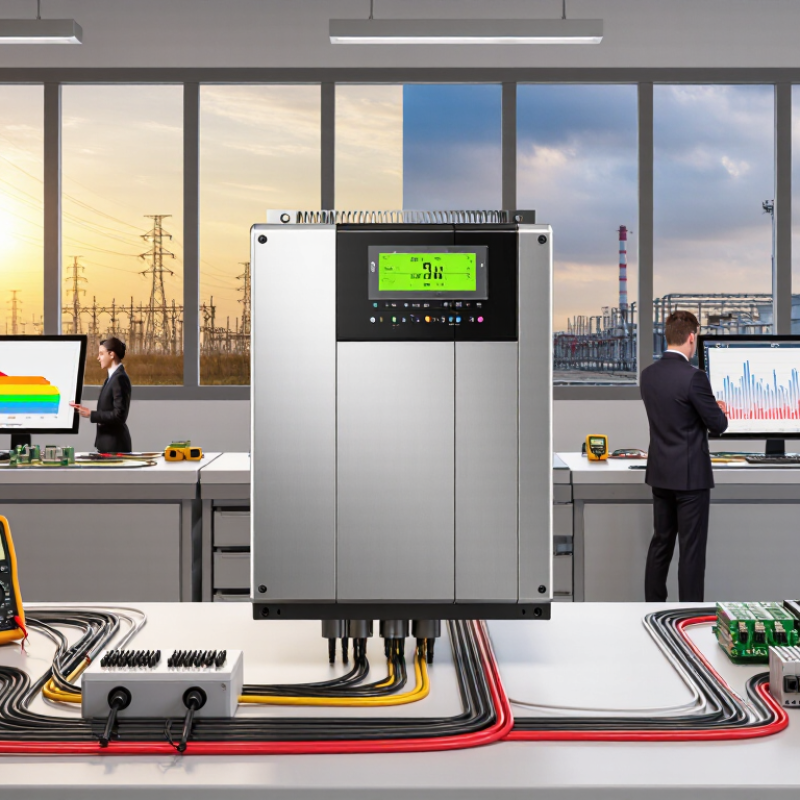
Advanced inverter technology matters when sourcing equipment for varied climates and power systems. An inverter does more than convert direct current into usable alternating current. It must manage changing sunlight, temperature, voltage, and load conditions. With maximum power point tracking, or MPPT, the inverter continually adjusts operation to capture more energy from solar modules. This is especially useful when panels face different directions or experience partial shading. MPPT is not magic. Poor system design can still reduce output.
Grid-support functions add another practical layer. Modern inverters can regulate voltage, control reactive power, and reduce sudden changes in power delivery. These features help stabilize networks with high renewable-energy penetration. For global sourcing, compatibility with local grid codes remains essential.
Peak efficiency often reaches 96–99 percent, but real performance may be lower. Heat, dust, cable length, and low-load operation all create losses. That difference deserves attention.
Reliable purchasing begins with measurable evidence. Request efficiency curves, operating-temperature data, protection ratings, and independent test reports. Confirm the input-voltage range before comparing prices. Field technicians also notice details that brochures may miss, such as noisy cooling fans or difficult terminal access. One common mistake is treating 99 percent efficiency as constant. It is usually a best-case figure under controlled conditions. A careful sourcing decision should include installation quality, service access, spare parts, and verified performance over time.
Advanced inverter technology matters because global sourcing decisions affect every kilowatt-hour produced. U.S. Department of Energy technical assessments identify modern utility-scale inverters reaching more than 98% peak efficiency. That figure means less electricity becomes heat inside the conversion stage. For a 100 MW solar project, a one-percentage-point loss difference can represent significant annual energy value.
The practical benefit is broader than a headline rating. NREL’s PVWatts documentation shows that annual yield depends on inverter loading, temperature, voltage, clipping, and downtime. Advanced units can maintain efficient operation across changing conditions. They can also support voltage regulation and remote performance monitoring. These functions help reduce avoidable losses during cloudy mornings, hot afternoons, and partial-load periods.
Peak efficiency is not annual efficiency.
A sourcing team should request tested efficiency curves, not only marketing claims. DOE and Sandia National Laboratories testing methods provide useful references for evaluating conversion performance and reliability. Independent test results, thermal behavior, warranty terms, and service access should sit beside purchase price. A cheaper inverter may appear attractive, yet repeated shutdowns can erase that advantage. My own caution is simple: a spreadsheet can still lie. Site-specific simulations and measured operating data remain necessary before approving a global supply decision.
Global sourcing value: higher inverter efficiency converts more of the available DC solar energy into usable AC output.
Calculated energy yield from a fixed 1,000 kWh DC input before other system losses. The 98% reference reflects the upper end of the U.S. Department of Energy’s commonly cited inverter-efficiency range; advanced designs may exceed this level under suitable operating conditions.
Source context: U.S. Department of Energy, Energy Saver — Solar Photovoltaic System.
International sourcing demands more than efficiency figures. IEC 62109 addresses electrical, thermal, mechanical, and fire-related safety for power converters. During supplier reviews, examine test reports, protection settings, insulation design, and component traceability. A clean laboratory report helps, but production consistency matters more.
IEC 62116 evaluates anti-islanding performance for utility-interactive inverters. The inverter should disconnect or respond correctly when grid conditions become unsafe. IEEE 1547 adds important requirements for distributed energy resources connected to electric power systems, especially in North America. It covers voltage and frequency behavior, abnormal conditions, power quality, and communication capabilities. These standards are related, but they are not interchangeable. Local grid codes may add stricter settings.
Tips: Request certificates for the exact model and firmware version. Check whether testing used the destination grid frequency and voltage. Ask for regional compliance records, not generic claims. Confirm factory quality controls through sample testing and documented calibration. Small details often expose large sourcing risks.
Advanced inverter functions can support voltage regulation, frequency ride-through, and remote monitoring. However, more functions create more configuration points. That increases commissioning risk. I have seen specifications that looked complete but omitted firmware control limits. This is easy to miss. Build a compliance matrix with the importer, testing laboratory, and grid operator. Leave room for correction; standards evolve, and assumptions age quickly.
A long warranty can reduce procurement anxiety, but its wording matters more than its headline. In global sourcing, buyers should compare 10-, 15-, 20-, and 25-year coverage carefully. Some warranties cover only major components. Others exclude labor, transport, or installation errors. Ask who performs repairs when the equipment is located far from the supplier. A reliable contract should define response times, inspection procedures, and replacement responsibilities. Field experience shows that unclear service terms often create higher costs than the original equipment.
Tips: Request a warranty sample before ordering. Check whether spare parts remain available for the full warranty period. Confirm local technician training and remote diagnostic support. Ask for failure-rate records from comparable operating environments. Keep critical parts in regional storage when downtime affects production. Small details matter.
Advanced inverter systems can improve energy conversion, monitoring, and maintenance planning. However, advanced features may require specialized skills and compatible software. This is easy to underestimate. Procurement teams should review firmware support, communication protocols, and cybersecurity responsibilities. They should also test service access across different countries and time zones. A 25-year warranty sounds impressive, yet future component compatibility may remain uncertain. Buyers should therefore assess total lifecycle support, not warranty duration alone. Independent technical reviews and documented service cases add credibility. Careful questioning may feel slow, but it often reveals the real procurement risk.
Advanced inverter technology should be judged through total cost, not purchase price. Lazard’s Levelized Cost of Energy, Version 17.0, places utility-scale solar at approximately $29–$92 per MWh. Even small availability losses can weaken that margin. An inverter with grid-support functions, fault diagnostics, and remote monitoring may reduce lost production during unstable operating conditions. The value depends on site design.
Downtime is often the less visible expense. The IEA PVPS Task 13 reports that inverter failures remain a significant contributor to photovoltaic system downtime. Uptime Institute’s 2023 outage analysis found that 60% of surveyed organizations experienced an outage costing more than $100,000. This figure is not solar-specific, but it exposes the financial weight of interruption. A ten-hour outage during a high-price period can matter more than a modest efficiency gain. Timing matters.
Replacement exposure also deserves careful modeling. NREL’s Annual Technology Baseline treats inverter replacement as a separate lifecycle cost, rather than hiding it inside operating expenses. Global sourcing should therefore compare service access, spare-unit availability, firmware support, and qualified technicians. Advanced hardware is not automatically safer. It may introduce complex controls and longer training requirements. That is the uncomfortable part. Buyers should test failure simulations, not trust attractive datasheets. Use conservative assumptions, because perfect uptime is a convenient fiction.