What Are the Best Solar Battery Systems from China?

Finding the best solar battery systems from China begins with a practical question: what must your system power, and for how long? A family running lights, a refrigerator, and internet equipment needs a different setup from a workshop with heavy loads. Battery capacity matters, but usable capacity, inverter compatibility, and backup performance matter just as much.

Many Chinese manufacturers offer lithium iron phosphate batteries, known for their thermal stability and long service potential. Still, chemistry alone does not identify a reliable system. Compare the battery management system, stated cycle life, round-trip efficiency, warranty terms, and support available in your region. Check whether the battery works with your existing inverter, or whether installation requires a matched system. A specification sheet can look reassuring. Real installation details matter.

This guide will compare leading options by application, system design, and ownership needs—not by headline capacity alone. It will also explain what to verify in product documentation, including applicable safety certifications and clear warranty coverage. Ask who handles troubleshooting before purchase, and confirm how performance is measured. No shortlist removes every compromise. A lower upfront price may mean fewer integration choices or less local support; a premium model may be unnecessary for a small home. The right choice depends on your energy use, budget, climate, and backup priorities, so treat rankings as a starting point, not a promise.
What Are the Best Solar Battery Systems from China?

China’s Solar Battery Market: About 85% of Global Cell Output in 2023 (IEA)

China’s share of global cell output reached about 85% in 2023, according to the IEA figure cited for this market. That scale matters. It supports extensive manufacturing capacity and a broad supply chain, but it does not tell buyers which complete solar battery system will perform best at home.

Cell output is not the same as finished-system quality. A battery’s usable capacity, power rating, chemistry, and thermal controls affect daily performance. Check whether its inverter works with your solar panels, and compare warranty terms and expected cycle life. Ask for independent test documents, not only a product brochure. Small details count, such as whether the unit can supply essential circuits during an outage.

A large manufacturing base may make components easier to source, yet availability can vary by model and region. Installation quality and after-sales service also shape long-term reliability. Before choosing, request a clear breakdown of usable kilowatt-hours, backup limits, and service arrangements. I would not treat the 85% figure as proof that every system is dependable; it describes market scale, not the experience of each household. That distinction is easy to miss.

LFP Chemistry: Comparing Safety, Energy Density, and Cycle-Life Metrics

What Are the Best Solar Battery Systems from China?

LFP Chemistry: Comparing Safety, Energy Density, and Cycle-Life Metrics

For solar storage, lithium iron phosphate (LFP) offers a practical balance: stable thermal behavior, long service potential, and moderate energy density. The U.S. Department of Energy’s 2022 Grid Energy Storage Technology Cost and Performance Assessment uses about 85% round-trip efficiency as a benchmark for lithium-ion storage. Actual performance depends on temperature, inverter losses, and operating settings. LFP cells are generally less energy-dense than nickel-rich chemistries, so a cabinet may need more floor space. In a garage, that can matter.

Cycle-life claims need context. A figure such as 6,000 cycles is meaningful only when paired with depth of discharge, temperature, and end-of-life capacity. NREL’s 2024 Annual Technology Baseline models stationary battery systems with a 15-year life and 85% round-trip efficiency; these are planning assumptions, not a guarantee for every LFP product. Safety also depends on pack design, cell monitoring, thermal controls, and installation quality—not chemistry alone. A well-built system still needs careful review.

Tips: Ask for test conditions behind cycle-life claims. Compare usable kilowatt-hours, warranted throughput, and capacity retained at end of life. Check operating-temperature limits, too. A shaded, ventilated installation can help, although real-world conditions are rarely perfect.

How to Compare Systems by Usable kWh, Efficiency, and Warranty

When comparing solar battery systems from China, compare usable energy, not the larger headline capacity. A 10 kWh battery with 90% usable capacity provides 9 kWh before conversion losses. That may cover an evening of lighting, refrigeration, and networking, but not necessarily electric heating. Ask whether the quoted figure is measured at the battery or at the AC output. The boundary matters.

Efficiency needs the same careful reading. NREL’s 2024 Annual Technology Baseline uses about 85% round-trip efficiency for lithium-ion storage; this is a modeling benchmark, not a guarantee for a specific product. Check whether a supplier reports DC-to-DC or AC-to-AC efficiency, and whether standby consumption is included. Small differences accumulate over daily cycling. Annoyingly, spec sheets do not always use comparable test conditions.

Warranty terms deserve equal weight. Compare years, cycle limits, total energy throughput, and minimum retained capacity at the end of coverage. A long warranty can still be restrictive if it assumes light use or excludes certain operating temperatures. Request the full warranty document, plus written confirmation of local service and replacement procedures. Also check whether usable capacity is guaranteed over time. A neat headline number is not the whole story.

What Are the Best Solar Battery Systems from China?

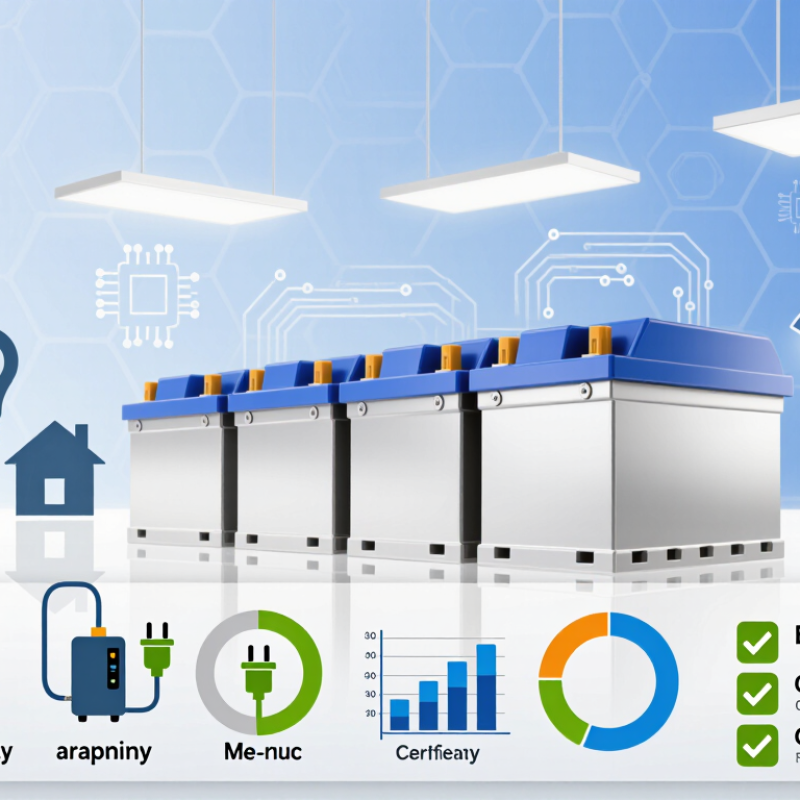
Compare systems by usable capacity, round-trip efficiency, and warranty—not nominal capacity alone.

How to read this: The chart estimates usable energy at 95% depth of discharge for common 5.12 kWh LFP module sizes. Treat it as a sizing example, not a product ranking. When comparing real systems, verify usable kWh at the stated operating conditions, AC round-trip efficiency (often around 90–95%), and the warranty’s term, throughput limit, and retained-capacity guarantee. Warranty terms vary by model.

Leading Chinese Brands: BYD, Huawei, Pylontech, and CATL

Chinese solar-storage suppliers bring different strengths to home and commercial projects. Battery-focused manufacturers often offer stackable lithium iron phosphate modules, allowing installers to expand capacity as household needs change. Integrated energy-system providers pair batteries with inverters and monitoring software. Modular specialists can simplify replacement or system growth, while large cell producers bring manufacturing scale. These are useful distinctions, not guarantees of quality.

The International Energy Agency’s Batteries and Secure Energy Transitions report (2024) says China held nearly 85% of global battery manufacturing capacity in 2023. Scale matters. It can support broad product ranges and supply, but buyers still need to check the specific system. Compare usable capacity, continuous output, warranty terms, inverter compatibility, and local service response. Ask how the battery performs during a power cut; backup features may require extra equipment. Also check whether quoted capacity is nominal or usable. That detail is easy to miss. A technically strong unit can still disappoint if installation support is weak. I would not rank suppliers from headline specifications alone. A clear wiring diagram and a real service contact count, too.

What Are the Best Solar Battery Systems from China? A Practical Comparison of Leading System Types

Compare system designs by application and technical fit. The categories below describe common lithium iron phosphate (LFP) storage configurations, not individual manufacturers or branded products.

System Type Typical Application Common Battery Chemistry System Configuration Key Selection Factors Main Trade-Off
Residential low-voltage system Homes with rooftop solar, self-consumption, and backup needs LFP is widely used in stationary storage because of its thermal stability and long cycle-life potential. Battery modules connect to a compatible low-voltage inverter; capacity can often be expanded by adding approved modules. Check inverter compatibility, usable capacity, backup power output, installation requirements, and warranty conditions. May require higher current and thicker cabling than a comparable high-voltage design.
Residential high-voltage modular system Homes seeking compact storage and integration with a compatible hybrid inverter LFP is common; chemistry and cell format vary by product. Series-connected modules create a higher-voltage battery stack. Expansion limits depend on the battery and inverter design. Confirm the approved inverter list, minimum and maximum module count, operating temperature range, and backup functionality. Compatibility is more system-specific; battery modules and inverter controls must work together.
Commercial and industrial cabinet or rack system Factories, offices, commercial buildings, and sites with demand-management needs LFP is frequently selected for stationary applications; final system design depends on site requirements. Multiple battery racks or cabinets are combined with power-conversion equipment and a battery management system. Assess usable energy, continuous and peak power, fire protection, thermal management, controls, and service support. Requires site-level electrical, fire-safety, and integration planning; installation is more involved than for a home system.
Utility-scale containerized system Grid-scale storage, renewable-energy shifting, and grid-support services LFP is a widely deployed option in stationary grid storage; project specifications vary. Battery racks are integrated into larger enclosures or containers with power-conversion, monitoring, and thermal-management systems. Evaluate project-level efficiency, power and energy ratings, degradation assumptions, safety design, grid-code compliance, and long-term service. Performance and economics depend on the complete project design, operating strategy, and local grid requirements.

Important: Performance figures, cycle-life claims, usable capacity, and warranty coverage are product- and operating-condition-specific. Compare datasheets using the same measurement boundaries, and verify certifications and local installation requirements before purchase.

Check IEC 62619 and UN 38.3 Compliance and Inverter Compatibility

The IEA’s Batteries and Secure Energy Transitions report says power-sector battery additions reached 42 GW in 2023, over 130% above 2022. Rapid growth makes careful product checks essential. For Chinese solar battery systems, ask for documentation tied to the exact battery model. IEC 62619 addresses safety requirements for industrial lithium batteries, including stationary applications. UN 38.3 covers tests for transporting lithium batteries. A general certificate or supplier statement may not prove that the offered model was tested.

Then check inverter compatibility in writing. Compare the battery’s operating-voltage range with the inverter’s acceptable range, not just their nominal voltage. Confirm continuous and peak current limits, charge settings, communications protocol, and supported firmware. A 51.2-volt label alone tells you little about whether the system will operate reliably. I would also ask for the test summary and installation instructions; paperwork helps, but it cannot replace a qualified site assessment. That part is easy to overlook.

Tips: Have the installer confirm the battery–inverter pairing against both manufacturers’ technical documents. Keep the test records and settings sheet with the system. If a specification is unclear, pause before purchase.