
How to Choose China Best Chemical IBC Tank Supplier?
Choosing the best Chemical IBC Tank supplier in China requires more than comparing prices online. The right partner should understand chemical compatibility, container performance, and safe handling requirements. A suitable tank must match the chemical’s density, temperature range, viscosity, and storage conditions. High-quality HDPE, a strong galvanized or painted steel cage, and a reliable discharge valve are essential details.
Experienced buyers usually request technical drawings, material specifications, test reports, and production photographs. They also check whether the supplier can provide traceable batches and consistent quality. Factory audits, sample orders, and independent inspections can reveal problems that attractive quotations often hide. Ask for evidence of leak testing, pressure testing, and closure performance. Do not rely only on a polished website.
A professional supplier should communicate clearly about custom fittings, pallet designs, filling limits, and delivery schedules. They should also explain how their products support applicable transport, chemical packaging, and workplace safety requirements. Certifications matter, but their scope and validity must be verified carefully. A certificate alone cannot prove every tank is reliable.
The “best” supplier depends on your application. A food-grade operation, a solvent distributor, and a water-treatment company may need different designs. That is where practical experience becomes valuable. Still, supplier claims should be challenged politely. No checklist is perfect. One missed detail can create leakage, contamination, or costly delays. By comparing technical evidence, factory capability, after-sales support, and total cost, buyers can select a dependable China Chemical IBC Tank supplier with greater confidence.
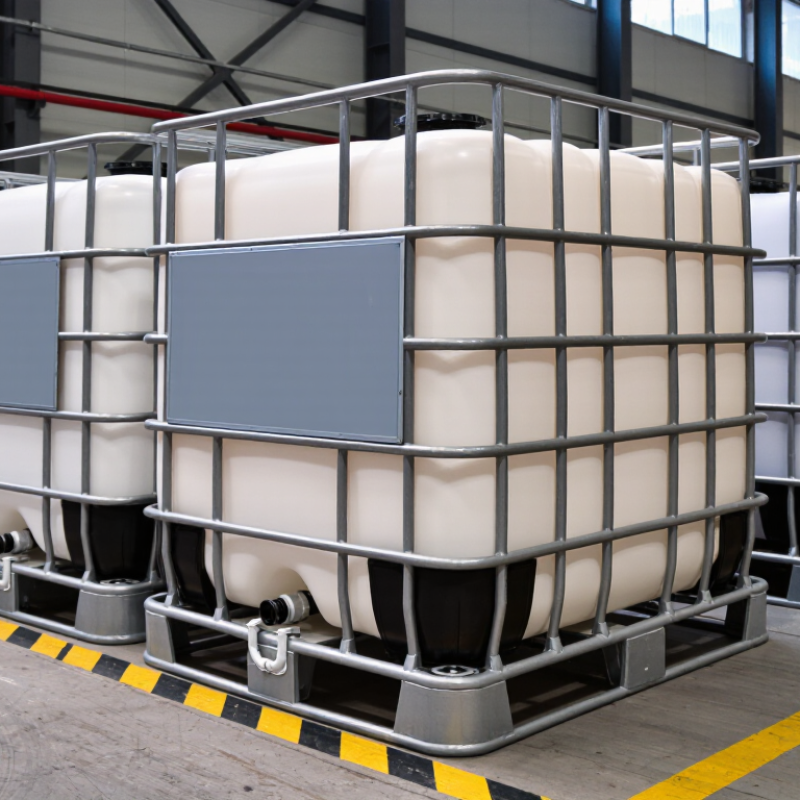
Define Chemical Compatibility and Capacity: 1,000-L IBCs and UN 31HA1 Ratings
Choosing China’s best chemical IBC tank supplier starts with compatibility, not price. A 1,000-L IBC may suit many operations, but volume alone proves little. Check the chemical’s SDS, concentration, temperature range, density, and storage duration. Polyethylene can resist some acids, alkalis, and solvents, yet compatibility may change with heat or concentration. Ask the supplier for written compatibility data and previous application experience. Do not rely on a general product list.
A UN 31HA1 rating describes a composite IBC with a rigid plastic inner receptacle and a steel outer cage. It confirms tested performance under defined transport conditions. It does not mean the tank is suitable for every chemical. Verify the complete UN marking, test reports, production traceability, valve materials, gasket type, and closure design. A reliable supplier should explain inspection intervals and provide clear loading limits. The actual usable capacity may be below 1,000 liters because headspace and expansion must be considered.
Tips: Request a sample compatibility review before ordering. Confirm whether the tank will face sunlight, freezing temperatures, or repeated handling. Inspect welds, valve protection, and pallet stability. Ask for photos from factory inspections, but do not treat photos as proof. I have seen specifications look correct while the gasket material was overlooked. That small detail can cause leakage, contamination, and costly downtime. Compare technical evidence, not polished promises.
| Selection Dimension | Reference Data for a 1,000-L Chemical IBC | What the Buyer Should Verify | Recommended Selection Standard |
|---|---|---|---|
| Nominal Capacity | Nominal volume: 1,000 L Actual working fill should remain below the nominal capacity to allow for thermal expansion and safe handling. | Confirm the marked nominal capacity, maximum filling level, tare mass and maximum gross mass on the technical data sheet. | Use the required operating volume, not only the nominal tank volume. |
| UN Packaging Rating | UN 31HA1 identifies a composite IBC for liquids with a plastic inner receptacle and a steel outer casing. | Request a clear UN marking, current UN test certificate and evidence that the tested design matches the proposed tank configuration. | Choose a valid UN-rated design for regulated dangerous-goods transport. |
| Inner Receptacle Material | Common material: high-density polyethylene (HDPE). HDPE is widely used for many aqueous chemicals, detergents and industrial liquids. | Check HDPE grade, wall construction, UV protection, additive package and chemical-resistance information for the exact substance. | Select a material supported by documented compatibility data. |
| Chemical Compatibility | Compatibility depends on concentration, temperature, exposure time, mechanical stress and the specific formulation. No single plastic is universally compatible. | Compare the chemical Safety Data Sheet (SDS) with the supplier's compatibility chart. For aggressive, concentrated or mixed chemicals, obtain a written compatibility assessment or conduct a sample test. | Treat compatibility as chemical-specific, not product-category-specific. |
| Typical Chemical Applications | Potential applications may include water-based solutions, selected detergents, surfactants and certain non-oxidizing industrial chemicals, subject to compatibility confirmation. | Confirm compatibility with the chemical's concentration, pH, temperature, density and storage duration. Oxidizers, solvents and strong acids require special review. | Approve the complete chemical formulation before filling the IBC. |
| External Dimensions | A common 1,000-L IBC footprint is approximately 1,200 × 1,000 mm; overall height is often around 1,150–1,200 mm. Dimensions vary by design. | Confirm exact length, width, height, stack height, door clearance and vehicle loading dimensions from the supplier's drawing. | Use verified drawings for warehouse, container and transport planning. |
| Pallet and Base Design | Common base options include steel, plastic or hybrid pallets. A flat, rigid base supports forklift and pallet-jack handling. | Check fork-entry dimensions, pallet strength, corrosion protection, drainage and compatibility with the handling equipment. | Match the pallet design to the warehouse and loading system. |
| Cage and Structural Protection | The outer steel cage protects the plastic inner receptacle from impact and helps maintain the container shape during handling. | Inspect tube or wire size, weld quality, corrosion protection, cage-to-pallet connection and resistance to deformation. | Prefer a rigid, uniformly welded cage with documented load testing. |
| Filling Opening | Typical top openings are approximately 150 mm or 225 mm, depending on the design and application. | Confirm opening diameter, gasket material, venting arrangement, cap design and whether the opening supports the filling equipment. | Choose an opening that limits spillage and supports safe filling. |
| Discharge Valve | Common outlet sizes include approximately 50 mm or 75 mm. Valve materials and gasket materials must match the chemical. | Verify valve type, outlet connection, seal material, residual-drainage design, tamper protection and leak-test results. | Prioritize chemical-resistant seals and controlled discharge. |
| Gasket and Seal Materials | Common sealing materials include EPDM, NBR, FKM and PTFE. Their suitability varies significantly by chemical and temperature. | Request the material specification and compare it with the chemical SDS, operating temperature and cleaning process. | Select the gasket independently from the tank body material. |
| Temperature Range | HDPE performance is temperature-dependent. A typical service range may be approximately -20°C to +40°C, but the permitted range is design-specific. | Confirm the supplier's allowable filling, storage and transport temperatures for the exact chemical and UN-approved configuration. | Do not use a general temperature range without written confirmation. |
| Density and Gross Mass | A 1,000-L IBC filled with water has approximately 1,000 kg of product mass, excluding the tare weight of the IBC. Higher-density chemicals increase gross mass. | Calculate product mass using actual density and confirm that the resulting gross mass remains within the rated limit. | Size handling and transport equipment for the actual gross mass. |
| Leak and Pressure Testing | UN-certified IBC designs are tested according to applicable dangerous-goods packaging requirements, including leakproofness and handling-related tests. | Request production leak-test procedures, inspection records, test frequency and traceability for valves, caps and closures. | Require documented inspection and leak-test controls for every production batch. |
| Documentation | Essential documents may include technical drawings, material specifications, SDS-based compatibility confirmation, UN certification and inspection records. | Ensure documents identify the same model, capacity, closure configuration and materials as the supplied IBC. | Avoid suppliers that provide only generic certificates. |
| Supplier Quality Control | Important controls include incoming-material inspection, dimensional inspection, weld inspection, valve testing, leak testing and final visual inspection. | Ask for a quality-control plan, batch traceability process, nonconformity procedure and sample inspection report. | Choose a supplier with repeatable, documented production controls. |
| Reuse and Service Life | Reuse depends on the IBC design, previous chemical, cleaning process, inspection results and applicable transport regulations. | Confirm whether the intended use is single-trip, reusable or reconditioned, and establish inspection criteria before each reuse. | Never reuse an IBC without cleaning, inspection and compatibility approval. |